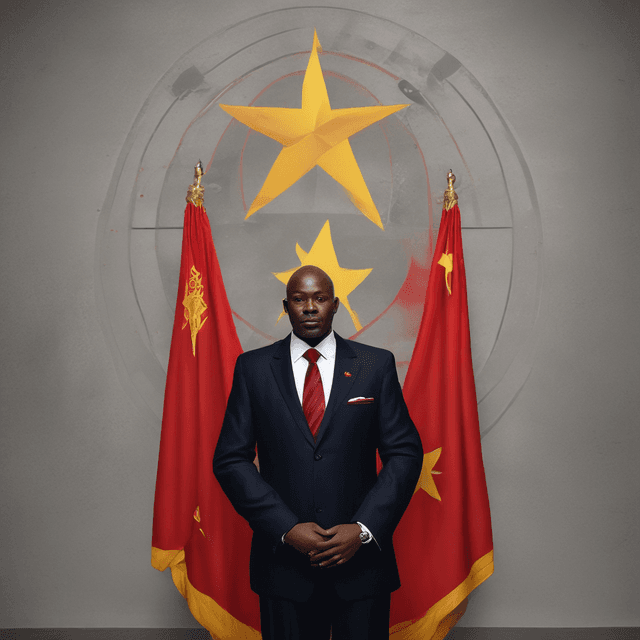
| Name | East Brangola |
| Economy | Centrally-planned, focused on rapid industrialization |
| Location | Eastern half of the Brangolan peninsula |
| Government | One-party dominated regime |
| Independence | Gained in the 1920s after a violent revolution |
| Former status | |
| Type of state | Authoritarian socialist state |
| Geopolitical role | Wields significant economic and military power, plays a major role in regional geopolitics |
| Relationship with neighbor | Regional rival of more democratic West Brangola |
East Brangola is an authoritarian socialist state located in the eastern half of the Brangolan peninsula. With a population of over 45 million, it is the larger and more populous of the two Brangolan nations, but also more politically and economically repressive. East Brangola is a regional power that remains in strategic competition with its democratic neighbor, West Brangola.
The territory of modern-day East Brangola was originally colonized by the British Empire in the 19th century, becoming a part of the British East Indies as the colony of British East Brangola. Under British rule, the region developed an economy centered on the export of cash crops, minerals, and other raw materials.
In the early 20th century, a nationalist independence movement began to grow, inspired by socialist and anti-colonial ideologies. This culminated in the East Brangolan Revolution of 1924, a violent uprising that overthrew the British colonial authorities after years of protests, strikes, and guerrilla warfare.
The revolution was led by a charismatic Marxist revolutionary named Damian Kurama, who established a one-party Brangolan People's Socialist Republic (BPSR) upon taking power. Kurama ruled the country as its authoritarian, cult-of-personality style leader until his death in 1952.
Since then, the BPSR has maintained a repressive, totalitarian political system dominated by the Brangolan Revolutionary Party. While undergoing economic reforms and gradual liberalization in recent decades, East Brangola remains an ideologically rigid and centrally-planned state capitalist system.
East Brangola occupies the eastern half of the Brangolan peninsula, covering an area of around 375,000 square kilometers. The geography is diverse, ranging from tropical rainforests in the north to arid, mountainous regions in the south. The climate is predominantly hot and humid year-round.
The country has abundant natural resources, including significant deposits of oil, natural gas, coal, precious metals, and timber. Its extensive coastlines and navigable rivers have also made it an important maritime and transportation hub. East Brangola's strategic location and wealth of resources have made it a target of interest for foreign powers over the centuries.
East Brangola is a one-party state ruled by the authoritarian Brangolan Revolutionary Party (BRP). The party's general secretary serves as the head of state and government, wielding near-absolute power. Elections are tightly controlled, with only BRP-approved candidates permitted to run.
The government maintains a pervasive surveillance and security apparatus to suppress political dissent and independent civil society. Human rights abuses, including arbitrary detention, torture, and restrictions on freedom of expression, are widespread. East Brangola is considered one of the most repressive regimes in the region.
Externally, the country follows an assertive and sometimes belligerent foreign policy, often in direct opposition to the more democratic West Brangola. East Brangola has been accused of engaging in proxy wars, cyberattacks, and other forms of hybrid warfare against its neighbor. However, the two nations also maintain important economic ties and diplomatic relations.
East Brangola has a centrally-planned, state capitalist economy dominated by state-owned enterprises and the ruling BRP. After the revolution, the country underwent a rapid process of industrialization and collectivization of agriculture, transforming it from a primarily agrarian society to an urban, manufacturing-based economy.
Key industries include mining, energy, heavy industry, transportation equipment, and consumer goods. The country is a major global exporter of raw materials like oil, coal, and metals, as well as manufactured products like electronics, machinery, and textiles. However, living standards and economic opportunities remain uneven, with high levels of income inequality.
In recent decades, East Brangola has undertaken some market-oriented reforms, allowing more private enterprise and foreign investment. However, the state maintains firm control over the "commanding heights" of the economy and key strategic sectors. Economic growth and modernization remain top priorities for the BRP regime.
East Brangolan culture reflects a blend of the country's British colonial heritage and its post-revolutionary socialist identity. The national language is a variant of English that incorporates elements of local Brangolan languages. Christianity and traditional Brangolan belief systems are the predominant faiths.
Militarism, nationalism, and socialist Marxism-Leninism are central to the government's ideology and cultural promotion. Mass mobilization, patriotic parades, and the cult of the party leader are common features of public life. However, the country's diverse ethnic, linguistic, and religious minorities often face discrimination and assimilation efforts.
Despite the authoritarian restrictions, East Brangola has a vibrant tradition of arts and literature that draw on both colonial and revolutionary themes. The country's architecture, cuisine, and music also display unique blends of influences. However, independent artistic and intellectual expression is heavily monitored and censored by the state.
